Category Archives: Dry Ice Blasting

engineering | plastics | Deburrring PEEK plastic parts

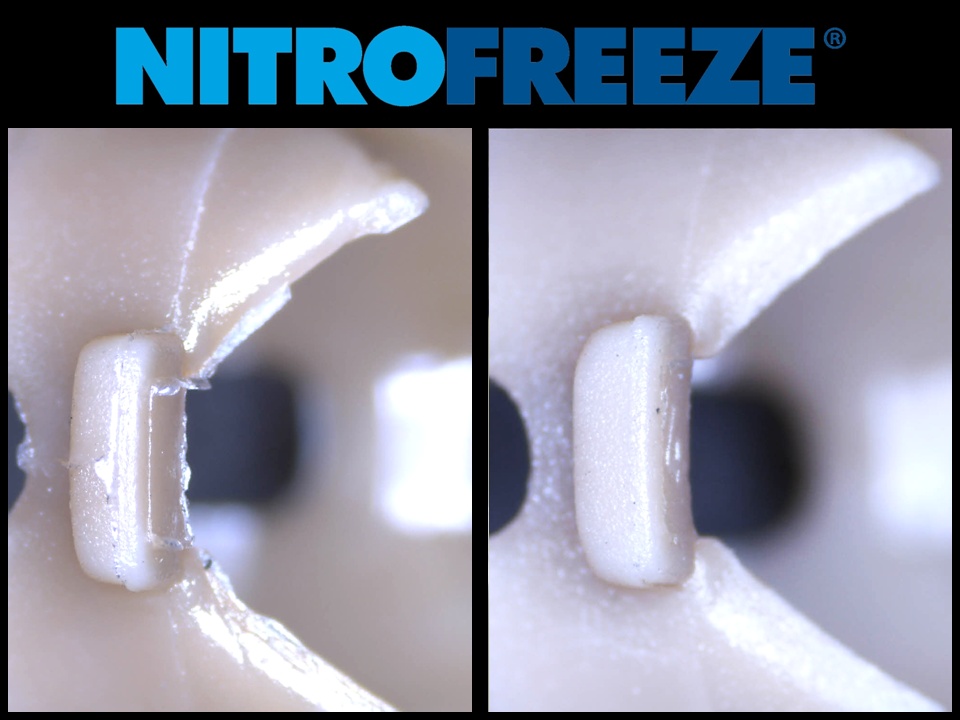
Dry Ice Deburring for High-Value Engineering Plastics

Engineering plastics are high-value, high-performance materials that have superior physical, mechanical, chemical and/or thermal properties. They cost more than commodity plastics, and parts are typically produced in lower volumes. Engineering-grade plastics are used in industrial and processing applications, and by the aerospace, defense, and medical industries. Examples of these high-value, high-performance polymers include PEEK, Delrin, […]

Continue Reading...

Dry Ice Blasting Cold Jet Aero2 PCS-60

Dry Ice Blasting for Molding & Manufacturing

Dry Ice Blasting for Molding & Manufacturing Introduction to Dry Ice Blasting Dry ice blasting is a cleaning method that uses dry ice pellets as an abrasive material. The dry ice is accelerated via a blasting gun and directed at the surface that needs to be cleaned. The dry ice pellets sublimate (go from a […]

Continue Reading...

mold tooling

Dry Ice Cleaning for Mold Tooling

Dry ice cryogenic cleaning is helping rubber and plastic molders to improve part quality and reduce operational costs. Dry ice cleaning, or dry ice blasting as it’s also known, removes fouling and residues from injection molds and other types of metal tooling. This safe, clean process won’t harm mold surfaces or their finishes and eliminates […]

Continue Reading...

dry ice blasting for injection mold cleaning

Dry Ice Blasting Update – Fall 2022

Dry Ice Shortage At the present time there is a shortage of dry ice available in the United States. This shortage is expected to alleviate by some point this fall. Nitrofreeze has contracts with a dry ice supplier to minimize delays in production, however, we can still complete dry ice blasting jobs at our facility […]

Continue Reading...

molded medical parts | medical injection molding | medical silicone parts

Why Medical Injection Molding Uses Cryogenic Deflashing

Medical injection molding supports the use of a wide variety of plastic and rubber materials. Examples include PEEK, polycarbonate, and LSR – just to name a few. During the injection molding process, excess material known as flash can escape the mold and mar part surfaces. The causes of flash are numerous and include parting line […]

Continue Reading...